Thursday, 13 March 2008

Potentielle Lantus Versorgungslücke (German)

Vorbemerkung: Die nachfolgenden Ausführungen stellen keine allgemeine Behandlungsempfehlung dar. Jeder Mensch benötigt eine andere Behandlung und daher ist nur ein Diabetologe oder Ernährungsberater in der Lage Ihnen individuelle Empfehlungen für Ihre Therapie zu geben. Meine Anmerkungen sind lediglich dazu geeignet Ihnen einen Denkanstoss für Ihre persönliche Behandlung zu liefern.

Das Basalinsulin Lantus ist ein modernes und sehr effektives Langzeitinsulin. Seine Wirkungsentfaltung erfolgt sehr gleichmässig und es muss nur einmal am Tag gespritzt werden. Vor allem die Langschläfer unter den Diabetikern werden diese Eigenschaft sehr schätzen.

Leider gibt es manche Menschen, bei denen Lantus nicht die gewünschte Wirkdauer von 24 Stunden besitzt. In Folge dessen gibt es im Bereich des Spritzzeitpunkts eine Unterversorgung mit Basalinsulin.

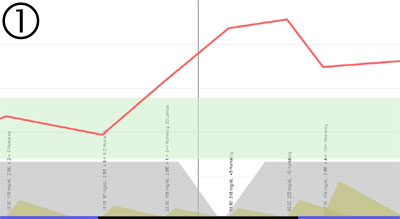
Nachfolgend ist eine solche Versorgungslücke dargestellt. Der schwarze Strich in der Mitte zeigt den Übergang zwischen zwei Tagen. Das Lantus wird vom Patienten um 22:00 Uhr gespritzt. Bis zur vollen Entfaltung seiner Wirkung vergehen mehrere Stunden. Folglich liegt die Versorgungslücke genau in der Nacht. Dies führt zu einem Anstieg des Blutzuckerspiegels von 22:00 bis 1:30 Uhr. Ab 1:30 Uhr setzt die Wirkung des um 22:00 Uhr gespritzten Lantus wieder ein. Allerdings kann das Lantus den Blutzuckerspiegel nur stabilisieren, aber nicht mehr senken. Der Patient wird also morgens mit einem hohen Wert aufwachen.


Das Problem liegt vor allem darin, dass der Patient zum Zeitpunkt der Versorgungslücke üblicherweise schläft und nicht geeignet reagieren kann. Deshalb ist es eine gute Vorgehensweise den Spritzzeitpunkt von 22:00 Uhr auf 18:00 Uhr zu verlegen. Dies kann man in mehreren Etappen vornehmen:

Tag 1: 21:00 Uhr
Tag 2: 20:00 Uhr
Tag 3: 19:00 Uhr
Tag 4: 18:00 Uhr

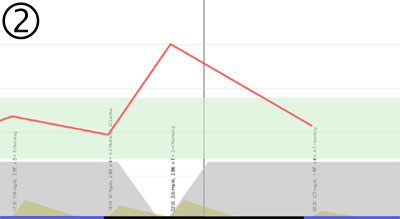
Nach der Verlegung würde sich die nachfolgende Situation ergeben. Die Versorgungslücke würde nun nach 18:00 Uhr auftreten. Dadurch hat der Patient um 22:00 Uhr noch die Möglichkeit die Blutzuckererhöhung durch eine Korrektur mit schnellem Insulin zu kompensieren. Dadurch sollte es gelingen morgens mit einem annähernd normalen Blutzuckerwert in den Tag zu starten. Gleichzeitig erhärtet sich so der Verdacht, dass die hohen Werte morgens nur der nächtlichen Versorgungslücke geschuldet sind.


Nun kann versucht werden die abendliche Versorgungslücke durch einen höheren BE-Faktor von 18:00 bis 21:00 zu kompensieren. Die Erhöhung der BE-Faktoren könnte beispielsweise wie folgt erfolgen:

18:00 Uhr von 3 auf 5
19:00 Uhr von 3 auf 5
20:00 Uhr von 2 auf 4
21:00 Uhr von 2 auf 3.5

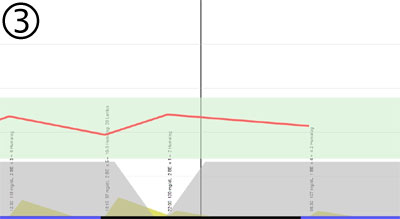
Dadurch ist mehr schnelles Insulin verfügbar, so dass um 22:00 Uhr ein normaler Blutzuckerwert erreicht werden kann - trotz der Versorgungslücke durch das Lantus. Nachfolgend ist das idealisierte Ergebnis einer Vorverlegung des Spritz-Zeitpunks und einer Erhöhung der abendlichen BE-Faktoren zu sehen:


Warnung: solche Anpassungen erfordern eine genaue Beobachtung der Blutzuckerwerte, weil die Gefahr einer Unterzuckerung besteht. In der Übergangsphase sollten die Blutzuckermessungen ab 18:00 Uhr im Abstand von 30 Minuten erfolgen!

Sollte Sie den Verdacht haben, dass eine solche Versorgungslücke bei Ihnen vorliegt, so sprechen Sie Ihren Diabetologen an, wenn Sie sich nicht trauen die obigen Punkte selber auszuprobieren. Auf jeden Fall möchte ich Sie ermutigen das Problem konstruktiv anzugehen und nach einer Lösung zu suchen.

Alternativ wäre es auch möglich die Dosis für Lantus zu halbieren und dann morgens und abends zu spritzen. Allerdings wäre dann am Wochenende kein langes Ausschlafen mehr möglich. Hier sollte man zwischen den verschiedenen Lösungansätzen abwägen und auch für diesen Lösungsansatz den Rat eines Diabetologen einholen.

Potential Lantus Gap (English)

Preliminary note: The following comments are not ment as an medical advisory. Every human needs other solutions for his health care. Therefore the diabetologist or nutritionist is the contact person for individual recommendations. My comments are meant to provoke thoughts about your treatment.

The drug called Lantus is a modern and very effective basal insulin. Its effect on the blood glucose is very steady and it needs only one injection per day. Therefore the late risers will appreciate this characteristic.

Unfortunately there are humans where the duration of the insulin effect is lower than 24 hours. This means that there is a potential gap in the supply with basal insulin. This gap happens around the typical injection time of Lantus.

The following image will show the potential impact of this gap. The black line in the middle separates two days. The Lantus will be injected around 22:00 o'clock. The insulin will need several hours to regain its effectiveness. Thus the gap is just after midnight. This causes an increase of the level of blood glucose between 22:00 and 1:30 o'clock. From 1:30 o'clock the effect of the Lantus will kick in that has been applied at 22:00 o'clock. But the Lantus can only stabilize the higher blood glucose level and it will not descrease it. The patient will experience a high blood glucose in the morning.


One problem is that the patient is sleeping when the gap is happening. Thus he can not react properly to the rise. Therefore it is recommendable to reschedule the injection of Lantus from 22:00 to 18:00 o'clock. This can be done in multiple steps:

Day 1: 21:00 o'clock
Day 2: 20:00 o'clock
Day 3: 19:00 o'clock
Day 4: 18:00 o'clock

After this shift the situation would be comparable to the next image. Now the gap happens around 18:00 o'clock. So the patient can treat the glucose increase with an injection of rapid insulin at 22:00 o'clock. This will allow him to reach a normal blood glucose in the morning. At the same time this hardens the assumption that the high glucose levels in the morning where caused by the nightly Lantus gap.


Now the patient can try to compensate the Lantus gap with an increase of the bread unit factor from 18:00 to 21:00 o'clock. This increase could be done as follows:

18:00 o'clock from 3 to 5
19:00 o'clock from 3 to 5
20:00 o'clock from 2 to 4
21:00 o'clock from 2 to 3.5

The higher level of rapid insulin should compensate the increase of glucose that is caused by the gap. In an ideal situation - like the following image - a normal glucose level can be reached at 22:00 o'clock:


Warning: this kind of changes to your treatment make it necessary to intensify your testing. To reduce the likelyhood of a hypoglycemia you should test your blood glucose level every 30 minutes from 18:00 o'clock!

Please contact your Diabetologist if you have the strong suspicion that you are experiencing this kind of Lantus gap and you are not willing to try the steps above. In any case I would like to encourage you to find a solution.

Another way to treat the gap is by applying Lantus two times a day with half of the dose. Please balance the pros and cons of these strategies and select the solution that will solve your problem in cooperation with your Diabetologist.

Tuesday, 11 March 2008

Activity and its influence on the insulin dose

Minor corrections have been made to the activity formula. It is planned that the percentage for every level of activity can be modified in your settings. Right now the behaviour is fixed as follows:

minor activity:

reduce the insulin dose for carbohydrates and the adjustment dose (if there is any) by 20 percent

high activity:

reduce both by 50 percent

maximum acitivity:

reduce both by 80 percent

Monday, 10 March 2008

Injection To Meal Interval (Spritz-Ess-Abstand)

The Injection To Meal Interval (wait time, Spritz-Ess-Abstand = SEA) describes the time in minutes that has passed from the moment of insulin injection to the consumption of the meal.

If you use negative values for this interval this means: Meal To Injection Interval (Ess-Spritz-Abstand). Therefore it describes a situation where the carbohydrate consumption of the meal is very slow. Chocolate for example makes it in most cases necessary to inject the insulin after the meal.

The diagram Insulin Curve is simulating the insulin behaviour. The negative values will now be added to the moment of the diary entry to correctly draw the gap between intake and injection.

Wednesday, 5 March 2008

Evolution driven by our users

Here is the roadmap of evolution that has been derived from the feedback of our users:

1. users of insulin pumps recommended that decimal doses of insulin should be supported. This innovation has already been implemented.

2. better documentation of the program used in the insulin pump: splitted insulin rate, reduced basal rate etc.

3. other diagrams to analyse the diary

4. documentation of different medicamentations.

5. support for the use of two different rapid insulins.

We are working on these steps right now. Please do not hesitate to write us your ideas to improve Glucosurfer.org

Friday, 15 February 2008

CSII basal profile now visible

The basal profile of the Insulin pump is now visible in the diagram "Glucose - Curve Glucose/time". It is very helpfull to identify the influence of the basal program on the blood glucose.

We hope that users of Insulin pumps can identify sections in their hour profile where the basal program should be modified: increased or decreased basal rate. Step by step these small modifications can be used to optimize the blood glucose level.

Monday, 4 February 2008

Article in c't 4/2008

A good way to support our project is with attention in the media. The well known computer magazine c't reported about Glucosurfer.org in volume 4/2008 on page 210.

We would like to thank Urs Mansman for his supportive article that is read by a broad audience with IT background.